

Tourmaline is one of the most versatile and popular gemstones, prized for the wonderful variety of colors and its unique properties. With such interesting history, healing benefits, and a place in jewelry collections all over the world, this stone certainly deserves more attention. Here’s everything you need to know about Tourmaline in the following comprehensive guide: types, meanings, uses, and much more.
Table of Contents:
- What is Tourmaline?
- History and Origin of Tourmaline
- Types of Tourmaline
- Tourmaline Colors and Their Meanings.
- Tourmaline in Jewelry
- How to Identify Real Tourmaline
- Where is Tourmaline Found?
- Tourmaline Grading and Value
- Buying Guide: How to Choose the Best Tourmaline
- Conclusion
What is Tourmaline?
Tourmaline is in the silicate family of gemstones and falls under the category of semi-precious stones. This stone can be found in an amazing array of colors, which also depends on the trace minerals involved in its chemical structure. It is available in almost all the colors of the spectrum of rainbow, from bright pink and green to black and blue. Because of this ability, it is one of the most sought after stones for jewelers and collectors.
Tourmaline is pleasing to the eyes and also has different physical properties making it distinct from any other mineral. Tourmaline is piezoelectric in nature; this simply means that, by heating or applying a pressure to it, it can emit electrical charges, and this property has been exploited in the production of various electronics.
History of tourmaline Origin of Tourmaline
The name “Tourmaline” is derived from the Sinhalese term “turmali,” or “mixed colors.” This explains the extensive range of colors that the gemstone can exhibit, which sometimes causes its confusion with other gemstones. For a long time, Tourmaline was identified with rubies, emeralds, and sapphires, but it became recognized as a distinct mineral species in the 19th century.
Previously, Tourmaline was mined in many areas of the world, including Brazil, Afghanistan, Sri Lanka, Mozambique, and the United States of America. The first recorded major discovery in the United States took place in the 1800s in Maine and California, which are still heavily significant sources for this gemstone today.
Types of Tourmaline
Tourmaline comes in several varieties each with unique properties and compositions. Let’s look at some of the main types:
Elbaite
This is the most common and known variety of Tourmaline. It is popular due to its beautiful colors which vary between pink to green. Elbaite is one of the more common ones to be found in jewellery, credited to the clarity and variety in colors.
Dravite
This is the less common form of Tourmaline. It has the color of dark brown to yellowish-brown. There are, however, most mainly found in such places as Australia and Austria. A lot of the time it is used in metaphysical healing applications.
Schorl
Schorl is the black variety of Tourmaline and is most commonly found in nature. Such a variety is widely used in healing practices for purposes of grounding and protection.
Colors of Tourmaline and Meanings
The colors of Tourmaline don’t just seem beautiful; they also carry unique metaphysical meanings. Let’s explore each hue to know their meanings.
Pink Tourmaline
Pink Tourmaline is the representation of love and compassion, which heals emotions. It is a heart chakra stone and brings softness and emotional balance to the behavior of people to eradicate emotional wounds and trauma.
Green Tourmaline
Green Tourmaline marks health, prosperity, and energy. This stone rejuvenates people with body and mind for individuals who look out for an increment in physical and emotional power.
Black Tourmaline
Among the most popular kinds, Black Tourmaline is a strong protective stone. It’s said to absorb everything negative and shield the wearer against harming environmental influences.
Watermelon Tourmaline
Watermelon Tourmaline boasts the gorgeous combination of pink with green, indicating harmony, balance, and the integration of opposites. It’s largely used in treatments concerning the heart chakra; it’s known to help warm the heart with love and compassion.
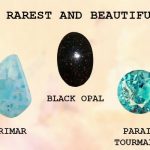
Paraiba Tourmaline
Neon blue or green color of this rare and highly sought variety is due to its traces of copper content. This Paraiba Tourmaline is highly precious and mainly valuable as a collector’s gem for rarity and vibrant color.
Tourmaline in Jewelry
Because of its broad color range, Tourmaline is very fitting for jewelry. It can be made in rings, earrings, necklaces, and even bracelets. Here are some popular designs of Tourmaline jewelry and tips for caring for your Tourmaline jewelry pieces:
Popular Tourmaline Jewelry Designs
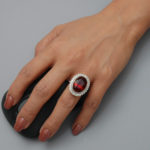
Tourmaline is widely used in fine jewelry and also in fashion jewelry. It can be cut into almost any variation, like round, oval, pear, or emerald cuts, among many others. Color zoning appealing Watermelon Tourmaline is also very popular in statement rings and pendants.
Care for Tourmaline Jewelry
The Mohs hardness of Tourmaline falls within 7 to 7.5, which makes it relatively scratch-resistant and suitable for daily wear. Still, you need to be very cautious with it. Do not expose your Tourmaline jewelry to chemicals or high temperatures. Cleaning is recommended by soft brushing and mild soapy water.
How to Identify Real Tourmaline
Key Identification Factors
- Inclusions: True Tourmaline generally has inclusions. Synthetic, on the other hand, is normally flawless.
- Hardness: Tourmaline is hard; therefore, it should not easily scratch. A natural Tourmaline stone should have a Mohs hardness of 7-7.5.
- Color Zoning: Some varieties of Tourmaline, for example, Watermelon Tourmaline, exhibit color zoning, which is a plus in terms of authenticity.
Tourmaline vs. Other Gemstones
Oftentimes, it is confused with other gemstones like emeralds, rubies, and sapphires. To confirm, however, it is best to ask the expert’s hand of a professional gemologist who can closely examine the stone.
Where is Tourmaline Mined?
Tourmaline is mined from various countries around the world. The ones given below are some:
- Brazil: Most prominent producing country for Tourmaline, which contains some of the finest color varieties, such as Paraiba Tourmaline and other vibrant colors.
- Afghanistan: Most popular for nice blue and green Elbaite.
- United States: A prominent country, especially Maine and California, producing the best quality Tourmaline.
Tourmaline Grading and Value
The value of a Tourmaline stone is determined based on several factors:
- Color: Bright and saturated colors of Tourmaline stones comprise the most valuable varieties. Paraiba Tourmaline in its neon blue-green is one of the costliest.
- Clarity: The fewer inclusions the Tourmaline has, the higher its price.
- Cut: The higher the quality of the cut, the brighter and more attractive the stone will be and accordingly, its price.
- Carat Weight: Typically, heavier stones cost more, but color and clarity are major considerations in the price.
How to Purchase the Best Tourmaline
To choose a Tourmaline, here are some guidelines to use:
1. Buy from a reputable seller: Ensure that you obtain a stone from a reliable source that can also provide authentication for the stone.
2. Color: Get a stone that has rich and even colors.
3. Clarity: Buy a stone that has minimal inclusion.
4. Cut: Ensure that the stone is cut to give it optimal brilliance in cutting.
Conclusion
Tourmaline is one of the most exciting gemstones, categorized under different ranges with varied colors and types, each of which carries unique benefits and properties. This makes Tourmaline a great choice when looking for a stone to uplift emotional well-being or as an outstanding addition to your jewelry collection.
Tourmaline can add some aesthetic and spiritual worth to your life. Its meanings, types, and uses will therefore make it easier for you to make a wise decision when buying or wearing it.









Leave A Comment