

Opal is undoubtedly one of the most beautiful gemstones that are known for their play-of-color and mesmerizing varieties. Be it a gemstone enthusiast or someone who is looking to buy an opal, knowing the various types of opals and their importance can let you make an apt decision. This all-inclusive guide will understand everything about the opal gemstone, its varieties, history, care tips, and mystical qualities.
Table of Contents
- Introduction to Opal Gemstone
- History of Opal Gemstone
- Types of Opal Gemstones
- How to Identify Authentic Opal Gemstones
- Buying Tips for Opal Gemstones
- Caring for Your Opal Gemstone
- Conclusion
Introduction to Opal Gemstone
One of the most interesting and colorfully beautiful gemstones in the marketplace, opal is a stunning find. None can compare to the vibrant colors and remarkable shifting patterns that it displays. While many flash colors, the opal holds the reputation of flashing colors and is thus considered the October birthstone, associated with creativity, passion, and emotional balance.
History of Opal Gemstone
Opal was an admired stone all throughout the history for its beauty and mystical energies. The term “opal” is given in honor of the Sanskrit word “Upala,” which means “precious stone,” and later, the Greek word “Opallios” means “to see a change in color.” In ancient Rome, it would symbolize love and hope. Opal was already believed to possess great powers during the Middle Age, when it was considered a talisman that could bring good fortune.
Throughout history, opals have been cherished by royalties, from Roman emperors to European queens who have collected some radiant stones. Modern times have seen Australia become the epicenter of opal mining. Today, it supplies almost 95% of the world’s opals.
Types of Opal Gemstones
Opal gemstones come in several varieties and have rather diverse characteristics. Let’s get into the types of opals and their unique properties.
Black Opal
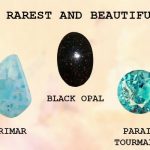
Black opal is the most valuable and rarest variety of opal. It shows a dark body tone, which is black or dark grey coloring, to bring out vivid bright play-of-color. The deep background contrasts excellently with bright flashes of colors, so it’s easily understandable why black opals are so highly sought by collectors. The most famous black opals are those mined in Australia at Lightning Ridge.
Key Features:
- Dark body tone enhances the play-of-color.
- Costliest and rarest form of opal.
- Primarily found in Australia.
White Opal
White opal, or “milky opal,” has a light or white body tone. This type is more common than black opal and shows paler, watercolor-like flashes of color. The play-of-color in white opals is less bright, but they are popular for their delicate beauty.
Key Characteristics:
- Light or white body tone.
- Much more common and cheaper than black opal.
- Exhibits pastel tints in play-of-color.
Fire Opal
Unlike the standard variety of opals, fire opals cherish their body color that is ranging from yellow to orange to red. The term “fire” applies on the body color rather than the play-of-color, as this color play is normally absent or at minimal in fire opals. These gemstones are transparent to translucent and commonly found in Mexico.
Key Characteristics:
- Body tone is bright yellow, orange, or red.
- Little to no play-of-color.
- Mainly mined in Mexico.
Boulder Opal
Boulder opal forms inside cracks and crevices of ironstone boulders. It is relatively rare and is typically cut with part of the host rock still attached, which gives an extremely colorful contrast between the opal and earthy ironstone. Boulder opals exhibit an entire range of play-of-color, and their main origin is Queensland, Australia.
Main Features:
- Formed within ironstone boulders, often retaining the host rock.
- Vibrant play-of-color with earthy undertones.
- Origin: Queensland, Australia.
Crystal Opal
Crystal opal features a transparent to translucent body which means colors in the stone can be exhibited very vividly. This opal may have its body tone range from colorless to light or dark and has excellent play-of-color. Crystal opals are highly valued for their transparency and clean patterns of color.
Main Features:
- Transparent or translucent body.
- Intensive play-of-color.
- Craved for robust clarity and color .
Ethiopian Opal
Ethiopian opal is one of the recent favorites because it is relatively inexpensive and has amazing play-of-color. Ethiopian opals are hydrophane, hence they can absorb water thereby temporarily changing the color and transparency of the stone. Ethiopian opals come in some of the brightest colors. Collectors love to find them.
Important Characteristics:
- Hydrophane property – susceptibility to water absorption.
- Inexpensive but is remarkable in itself.
- Origin-Ethiopia
Common Opal
Common opals do not display any play-of-color like the precious ones. They occur in any one of a range of colors from pink through green, to yellow and blue. They don’t have to be showy, but common opals are prized for their smooth, opaque appearance. People can work with them in healing practices.
Primary Characteristics.
- Does not have any play-of-color.
- Is available in various colors that are solid.
- Quite commonly used in crystal healing.
How to Identify Authentic Opal Gemstones
If you’re looking to purchase an opal gemstone, it’s important to know how to determine the authenticity of an opal from treated or synthetic stones. Here’s how to identify a real opal:
Look for Play-of-Color
The most important characteristic of a real opal is play-of-color. Put the stone in various light sources and see flashes of colors, as from a rainbow. If colours look too uniform or lifeless, the stone could be synthetic.
Examine for Natural Inclusions
Often, opals naturally possess inclusions or minor imperfections formed when the opals are created. In the case of boulder opals, these inclusions can be small cracks, spots, or even ironstone matrix. Synthetic opals do not have any of these natural imperfections.
Hydrophane Test for Ethiopian Opals
Ethiopian opals are hygroscopic. That means it absorbs water. So, if you submerge the Ethiopian opal in water, you can expect it to become more transparent for a little while. Do not test all opals because this may damage some of them.
Obtain Certification
Always source opals from reputable dealers who can give certification that the gemstone is authentic. Then an authorized gemologist decides whether or not the opal is natural or synthetic and any treatments it has.
Buying Tips for Opal Gemstones
In buying an opal gemstone, here are some of the important factors to consider for you to get the best quality of your investment:
Colour and Play-of-Colour
The play-of-colour is the most important aspect when choosing an opal. The more brilliant and intense colors will be, the costlier the gemstone. Black opals with strong flashing red varieties are deemed the most expensive.
Body Tone
Body Tone: This is the background color of an opal. The color can range from a dark, black color to even a light white color. Generally, the deeper the body tone, the more intense the play-of-color and the higher the value of the stone.
Clarity
The clarity of an opal is the measure of how clear or transparent it is. Crystal opals rank at the top in terms of clarity since this means that their play-of-color will be much brighter.
Size and Carat Weight
Just like in other gemstones, the size and carat weight of an opal can dramatically affect its price. Thus, big opals with vivid color shows would cost more, but smaller ones with strong play-of-color could also be quite pricey.
Care for Your Opal Gemstone
An opal is a delicate gemstone and requires special care to maintain its beauty, not to mention prevent damage. Here are some ideas on caring for your opal gemstone:
Do Not Expose to Heat and Dryness
Opals being hygroscopic are prone to thermal and moisture alterations. This will cause cracking or crazing when the stone’s water content varies too rapidly under extreme heat or dry conditions. In storing, it is best kept in a cool, moist surrounding by covering it in a moist cloth.
Handle with Care
Opals are relatively soft gemstones and carry a 5.5-6.5 rating on the Mohs hardness scale. Avoid wearing opal jewelry during activities that might subject the stone to impact or abrasion.
Mild Cleaning
You can clean your opal by gently wiping it with a soft cloth and warm, soapy water. Avoid cleaning your opal with harsh chemicals, ultrasonic cleaners, or steam cleaning since such methods are likely to hurt your stone.
Conclusion
Opal gemstones are some of the most interesting creations of nature, owning incredible play-of-color and a long history. Be it the mystery of black opals or the fiery brilliance of Mexican fire opals, or even to the otherworldly beauty of Ethiopian opals, all come as unique mixes of visual and spiritual allure. Then, when purchasing an opal, consider the color, the body tone, and clarity, and acquire from a reputable dealer to ensure that its provenance is confirmed. Good care of your opal gemstone will be treasured to be passed down generations for centuries to come, admiring and in awe of its qualities.








Leave A Comment